
Back
Explore how social media influences your self-esteem and emotions. Identify constant comparison and discover small changes to take care of yourself.

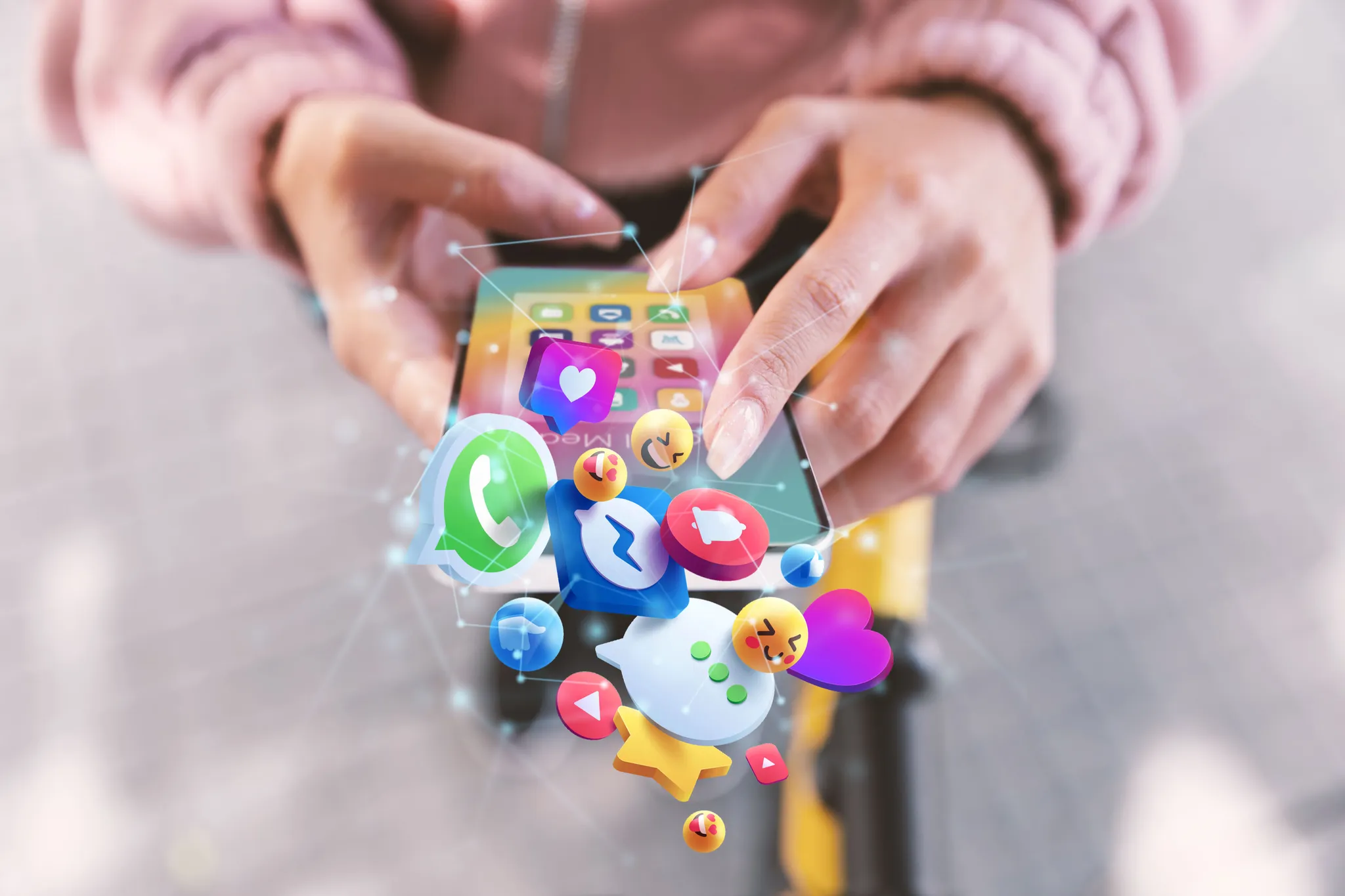
I love social media… but sometimes I hate it
Instagram, TikTok, filters, likes… Social media can cause us contradictory feelings and emotions. How do they make you feel?
Let's be honest.
How many times do you check social media a day?
Do you feel good the entire time you use them?
or…
Have you ever thought something like…?
Why does everyone else seem to have a better life?
I wish I looked like that.
I'm not posting this photo because I don't look good enough.
Why does my post have so few likes?
If this has happened to you, you are not the only person; it happens, and a lot.
Social media can be very fun, inspire you, help you express yourself, or make you feel part of something. But it can also become, without you realizing it, a hostile place where not-so-good emotions and sensations begin to arise, such as constant comparison, envy, or thinking you are not enough.
And no… it's not just a you thing, you are not the only one. Being constantly surrounded by screens, filters, and perfect lives is not always easy.
Table of Contents
Why do networks affect us so much?
How to know if networks are doing you good or bad?
And how does all this affect you?
Small changes that can help you
Keep this in mind!
Why do networks affect us so much?
Because networks are not just entertainment. They are also a place where we seek acceptance, inspiration, connection… and sometimes validation.
The problem is that we often end up comparing our "normal day" with someone else's best moment.
Their best photo.
Their best angle.
Their edited life.
And even though we know there are filters, heavy editing, or unrealistic lives… sometimes it still affects us.
Because even if we understand that social media is not real life, it is designed to keep us consuming content. The more content we consume, the more information we give to the algorithm about our preferences, and the algorithms do not care how you feel, but rather that you stay in the application as long as possible. Whether you feel joy, anger, or frustration doesn't matter; the networks will try to hook you regardless of the feeling or emotion they generate.
And so, little by little, without realizing it, you can enter a loop that you cannot get out of and that makes you feel worse and worse about yourself.
How to know if networks are doing you good or bad?
You compare yourself too much
You see someone and automatically think:
"I wish I looked like that"
"Everyone else seems better looking than me"
"My life is not that interesting"
Comparing yourself sometimes is human. The problem is when it becomes constant and you end up feeling like you are always lacking something.
You overthink before posting anything
You take a hundred pictures. You delete them. You look at them again. You wonder if you look good, if people will like it, if someone is going to judge you, or if maybe it's better not to post anything. And in the end, publishing something stops feeling fun and starts feeling like pressure.
Your mood changes after using social media
There are times you go in "just to browse" for a bit and come out feeling strange. More insecure. More tired. Comparing yourself more. Thinking too much about how others see you.
Likes affect you more than you would like to admit
Most of us care about validation. It's human. But maybe it's worth stopping for a moment if you notice that your mood changes depending on how many people react to something you posted. Because your value should not depend on a number.
You follow accounts that make you feel inadequate
There are profiles that inspire. And others that, although you don't realize it, make you expect more of yourself, compare yourself, or feel like you never measure up.
And how does all this affect you?
Constantly comparing yourself, depending too much on likes, or overthinking what to post can end up influencing how you see yourself. Sometimes, without realizing it, you start measuring your value based on other people's approval or feeling pressured to show a "perfect" version of who you are. In adolescence, a stage where you are still discovering your identity, this can generate more insecurity, self-demand, or self-doubt.
Small changes that can actually help you
There is no need to disappear from Instagram or throw your phone out the window. But making small changes does help.
For example:
Unfollowing accounts that make you feel worse about yourself.
Following people who bring something more than mere superficiality.
Reminding yourself that a photo does not define your worth.
Posting things because you like them, not just to be liked.
Taking breaks or setting a time limit if you notice that social media leaves you feeling bad.
Keep this in mind!
You don't have to be perfect.
Nor look like anyone else.
Nor look amazing all the time.
Your worth doesn't change because of a photo, a comment, or how many people see or react to something you posted.
You can learn to use social media without letting them decide how you feel or




Similar posts